‘It didn’t just kill them at sea’: An oral history of health and wellbeing in British fishing communities, c.1960 – present
Fishing is a dangerous and stressful occupation which impacts not only fishermen but also their families and communities. Fishers themselves face daily dangers in bringing home the catch, and heavy work in tough conditions can take a toll on bodies over time. The stresses of the industry also have repercussions for workers, families and communities ashore. Environmental, political and economic shifts have brought decline to fishing and allied trades in some parts of Britain, with negative health consequences for communities who previously depended on these industries. At the same time, those who live and work on, or beside, the sea often report benefits of contact with the ocean for their mental health and sense of wellbeing. This four-year research project will ask those who live and work in fishing communities to reflect on ways in which changes in their industry and communities have impacted their health and wellbeing. Their oral histories will be shared in publications, a film, and exhibitions that aim to provide a greater understanding of the impacts of marine change on those whose lives are most entwined with the seas. The research is funded by the Wellcome Trust as part of an Early Career Fellowship scheme, and is taking place at the University of Strathclyde.
Project outcomes
The research places community collaboration at its heart: outputs will be coproduced through oral history and community arts approaches. The researcher will work with community arts organisations to run arts workshops in each case-study area resulting in exhibitions, public events and a documentary film. Academic outputs will include a book, journal articles and conference presentations. Findings will be shared with policy makers and the wider public via: a project website; articles for the press; evidence presented to the UK Parliament’s All Party Parliamentary Group on Coastal Communities and the Scottish Parliament’s Cross Party Group on Fisheries and Coastal Communities.
The case studies
Three case-study areas with contrasting fishing histories have been chosen to represent the wide diversity of British fishing communities.
The English case-study, the Humber, includes Hull and Grimsby, once Britain’s largest fishing ports. These ports declined in the 1970s and 1980s as the redrawing of national maritime borders shut British trawlers out of Arctic fishing grounds. In the 1950s, around 850 distant water trawlers operated from the Humber; today there is no fishing fleet in Hull and only a small inshore shellfish fleet at Grimsby. Both cities are beset by economic and social deprivation; ‘healthy life expectancy’ in the Humber area is amongst the lowest in the country (Health Foundation 2025); Research by the University of Leeds showed that water tested at the mouth of the Humber estuary contains exceptionally high quantities of painkiller and antidepressant drugs. Deindustrialisation will likely be a prominent frame in this case-study, including consideration of ways in which memory of coastal pasts shapes health and wellbeing for generations born after deindustrialization.
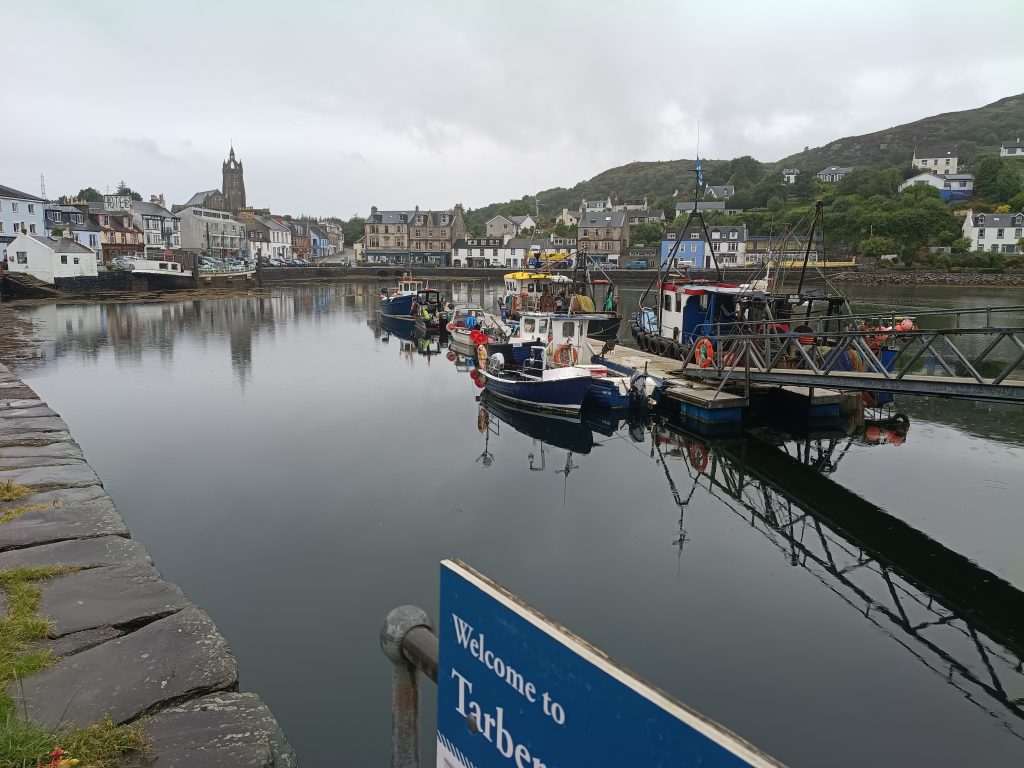
The western Scottish case-study, Firth of Clyde (including Campbeltown, Tarbert, Ayr, Troon, the Isle of Arran) represents small-scale inshore fishing. In the second half of the twentieth century, with the decline of the herring on which many communities here depended, fishers turned to creeling for shellfish and trawling for scallops and prawns. Fishing employment has continued to decline in the region, affecting the viability of some communities and leading to social problems (aging population, unemployment, poverty, and substance abuse), North Ayrshire (including part of the Firth of Clyde coast and the Isle of Arran) has the lowest healthy life expectancy in Scotland.
The third case-study area, Aberdeenshire in North East Scotland, includes the fishing ports Fraserburgh, Peterhead and Buckie, and is currently the most successful fishing area in the UK, accounting for around half of current UK fish landings (Scottish Government 2021). However, this success masks fragility and fragmentation: the capitalisation of the industry and its centralisation in a few ports has significantly altered labour relations, severing once deep connections between many of the region’s communities and fishing. As the industry became less attractive to local workers, skippers and fish processing factories recruited migrant labourers. The region has social, economic and health challenges, including high per capita rates of heroin addiction.